Wer nie sein Brot mit Tränen ass...
3-teilige Installation mit Video, Dia, Objekt | 2016
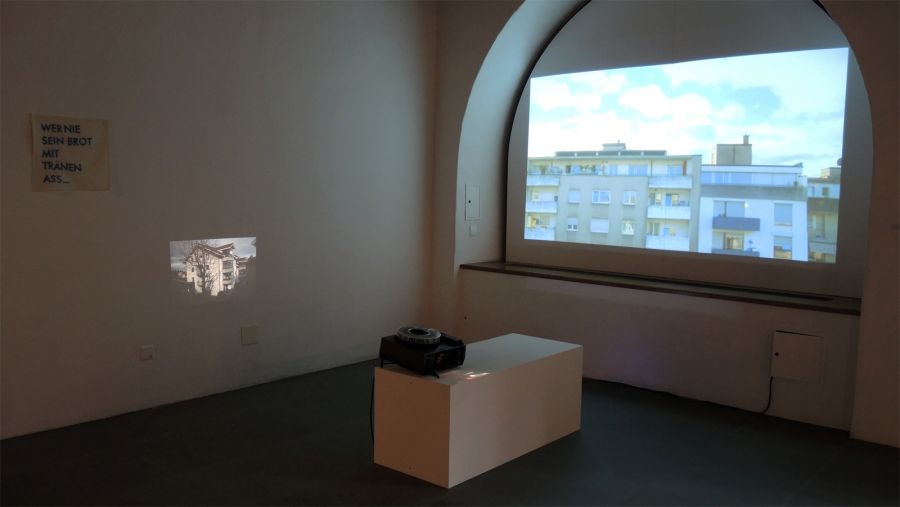
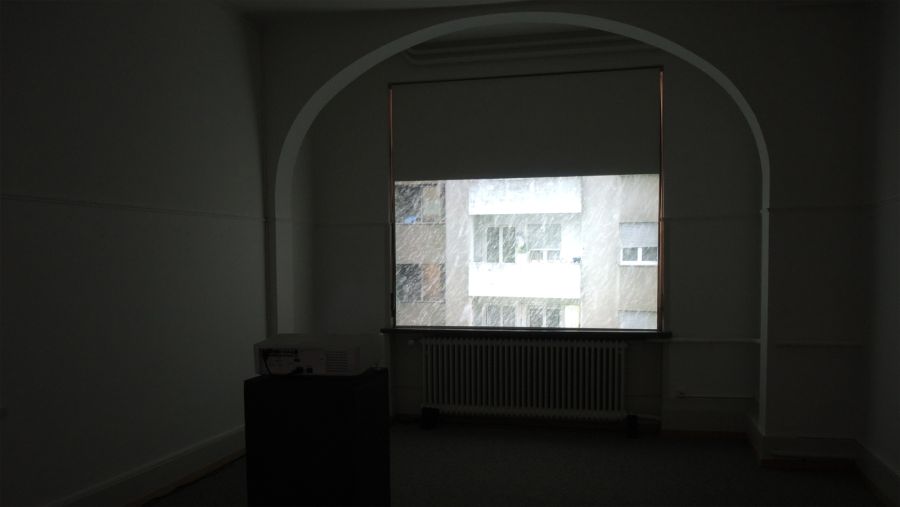
Videoprojektion «Variationen I und IV», Ton, je ca. 8 Minuten; an jedem Ort sind zwei Versionen zu sehen
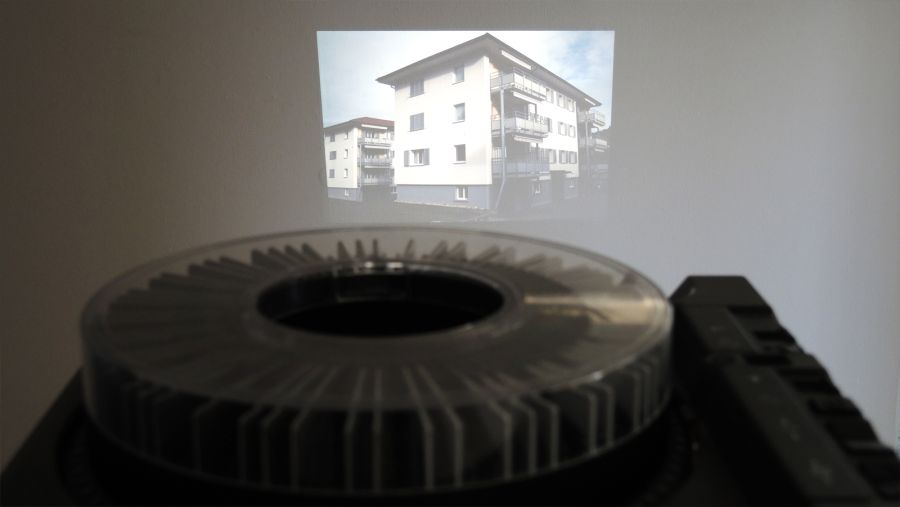
Diaprojektion «Behausung»
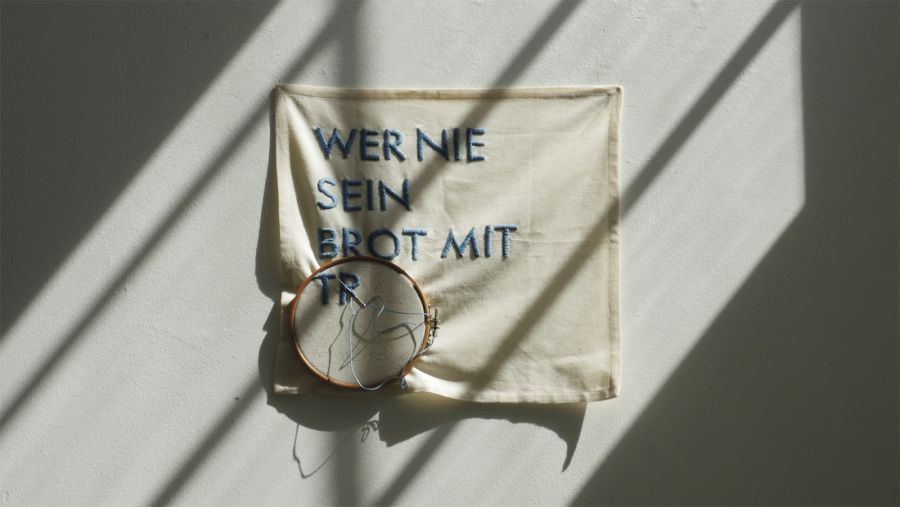
Stickerei «Handarbeit»
Die Videoarbeit ist als Partitur in vier Variationen gegliedert: Winter, Frühling, Sommer, Herbst; in diesen wiederum spiegeln sich Tag und Nacht. Es ist ein essayistischer Versuch, Innenwelten und Aussenwelten miteinander zu verweben. Eine Dokumentation des Alltäglichen, die fiktionale Spuren streut. Migrare – Migrieren – Wandern hat ebenfalls einen essayistischen Kern. Es ist ein Versuch, Geschichten zu ertasten.
Auch im Medienbereich migrieren die Daten. Sie müssen regelmässig migrieren, um sich zu erhalten. Wandern ist eine Frage der Medialität. Die dreiteilige Installation wandert zwischen Digitalem und Analogem. Das mechanische Klicken des Diaprojektors ist wie eine Uhr, die eine andere, unentrinnbare Zeit angibt.
Die drei verschiedenen Teile der Installation stehen im Dialog zueinander und verbinden die vier Ausstellungsräume (Sursee, Zofingen, Schüpfheim, Willisau) untereinander. Der Besucher findet an den verschiedenen Orten je zwei Variationen der Videoarbeit, die sich wiederum in unterschiedlichen Kombinationen wiederholen. So gilt immer das Gleiche niemals dasselbe…
Zwei Stimmen verkörpern Briefe, die eine Nähe in der Ferne suchen, die eine geliebte Person in Gedanken zu berühren versuchen. Zuhause sein, nicht mehr zuhause sein, das Zuhause träumen, das Zuhause wiederherstellen: Balkone, Behausungen, eine Serviette. Die dreiteilige Installation hat keinen Anspruch, eine soziale Studie zu sein, sondern zeichnet die menschliche Bedingung in ihrer Fragilität, in ihrer Resistenz, in ihrer Brüchigkeit.
Mit der Serviette erscheint das alltägliche Brot der Wanderer. So stickte ich in Handarbeit Goethes Worte («Wilhelm Meisters Wanderjahre» – Kapitel 32) darauf:
Wer nie sein Brot mit Tränen ass,
Wer nie die kummervollen Nächte
Auf seinem Bette weinend sass,
Der kennt euch nicht, ihr himmlischen Mächte.
Ihr führt ins Leben uns hinein,
Ihr lasst den Armen schuldig werden,
Dann überlasst ihr ihn der Pein;
Denn alle Schuld rächt sich auf Erden.
Video projection “Variations I and IV”, sound, each approx. 8 minutes; two versions can be seen at each location
Slide projection “Behausung” (“Dwelling”)
Embroidery “Handarbeit” (“Handmade”)
The video work is structured as a score in four variations: Winter, spring, summer, autumn; in these in turn reflect day and night. It is an essayistic attempt to interweave inner and outer worlds. It is a documentation of the everyday that strews fictional traces. Migrare – Migrating – Wandering also has an essayistic core. It is an attempt to feel out stories.
Data migrate in the media field as well. They have to migrate regularly in order to maintain themselves. Migrating is a question of mediality. The three-part installation wanders between the digital and the analog. The mechanical clicking of the slide projector is like a clock that indicates a different, inescapable time.
The three different parts of the installation are in dialogue with each other and connect the four exhibition rooms (Sursee, Zofingen, Schüpfheim, Willisau) with each other. The visitor finds two variations of the video work at each of the different locations, which in turn are repeated in different combinations. In this way the same thing is never the same…
Two voices embody letters that seek a closeness in the distance, that try to touch a loved one in thought. Being at home, no longer being at home, dreaming the home, restoring the home: balconies, dwellings, a napkin. The three-part installation does not claim to be a social study, but draws the human condition in its fragility, in its resistance, in its fragility.
With the napkin, the everyday bread of the wanderer appears. So I embroidered Goethe’s words (“Wilhelm Meister’s Wanderjahre” – Chapter 32) on it by hand:
Wer nie sein Brot mit Tränen ass,
Wer nie die kummervollen Nächte
Auf seinem Bette weinend sass,
Der kennt euch nicht, ihr himmlischen Mächte.
Ihr führt ins Leben uns hinein,
Ihr lasst den Armen schuldig werden,
Dann überlasst ihr ihn der Pein;
Denn alle Schuld rächt sich auf Erden.